Whether you're equipping a first kitchen or upgrading a well-used one, the right tools make daily cooking faster and more enjoyable. This guide covers three foundational picks — a hand-crafted utensil set, a professional-grade chef's knife, and a solid bamboo cutting board — chosen for cooks who want reliable, long-lasting gear without overspending. Together they form a practical starter trio, but each holds its own as a standalone purchase.
Whether you're outfitting a first kitchen or upgrading tools that have seen better days, choosing the right equipment makes daily cooking noticeably easier. This guide is for home cooks who want reliable, well-made pieces — not a drawer full of single-use novelties. The three products here cover different parts of the prep workflow: a knife, a board, and a set of wooden utensils. Together they form a coherent starting point; individually, each one earns its place on its own terms.
How to Choose Kitchen Essentials
Material durability and maintenance requirements. Olive wood and bamboo both need occasional oiling and hand-washing; high-carbon steel like VG-10 needs to stay dry between uses. Know what upkeep you'll actually do before you buy.
Knife-edge compatibility. Hard or abrasive surfaces — glass, ceramic, low-grade plastic — dull blades quickly. If you're investing in a quality knife, the surfaces and utensils it contacts every day matter.
Fit for your cooking style. A salad fork and scraper are useful in a vegetable-forward kitchen; a precision chef's knife matters more if you're breaking down meat or tackling fine julienne cuts. Match tools to your actual cooking habits.
Budget and coherence. A $119 knife paired with a $29 bamboo board and a $36 utensil set totals under $185 — a complete, considered toolkit rather than a random collection.
How These Products Differ
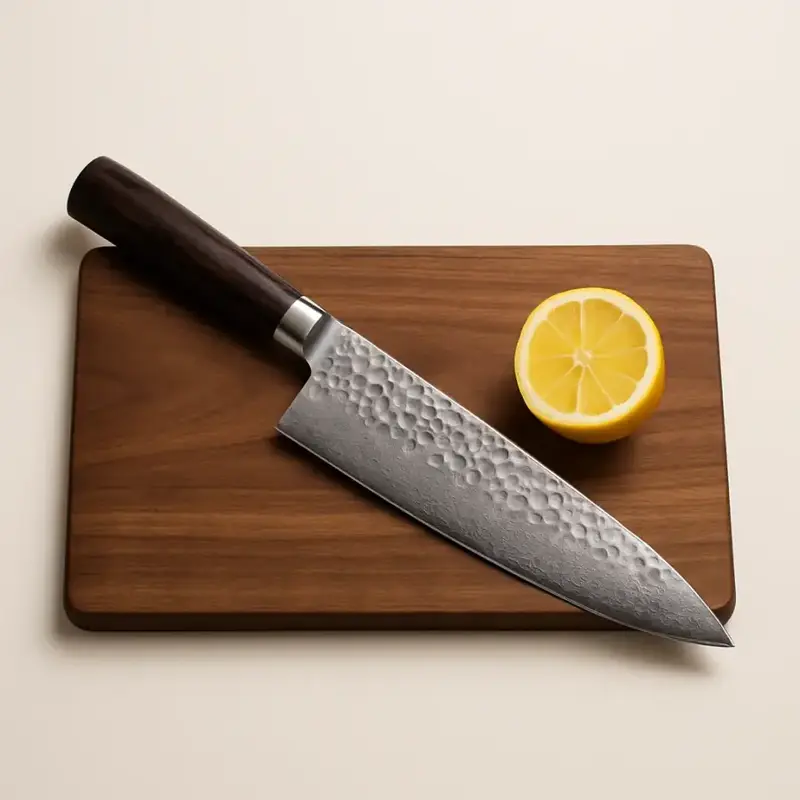
The 8" Japanese Chef's Knife is the most specialized item here. VG-10 cladded steel holds an edge through sustained daily use, and the full-tang pakkawood handle gives it a balance and weight that cheaper knives can't match. It's a long-term investment, not a casual purchase.
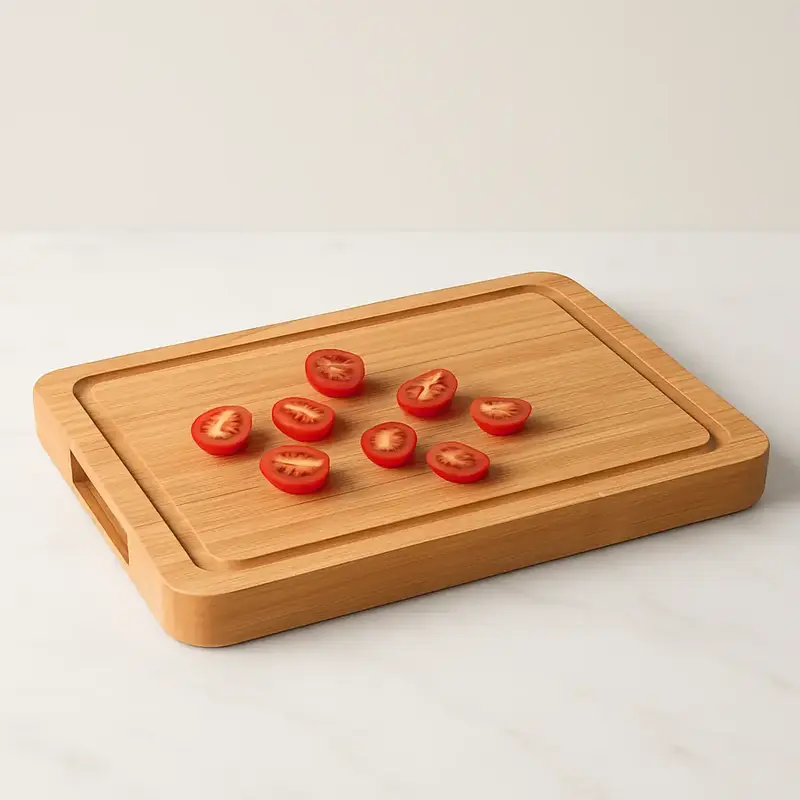
The Bamboo Cutting Board is the natural companion to that knife. At 38×25cm it's large enough for serious prep work, and bamboo's surface density is notably gentler on knife edges than many hardwoods or plastics. The juice groove is a practical feature that earns its keep when breaking down poultry or slicing ripe tomatoes.
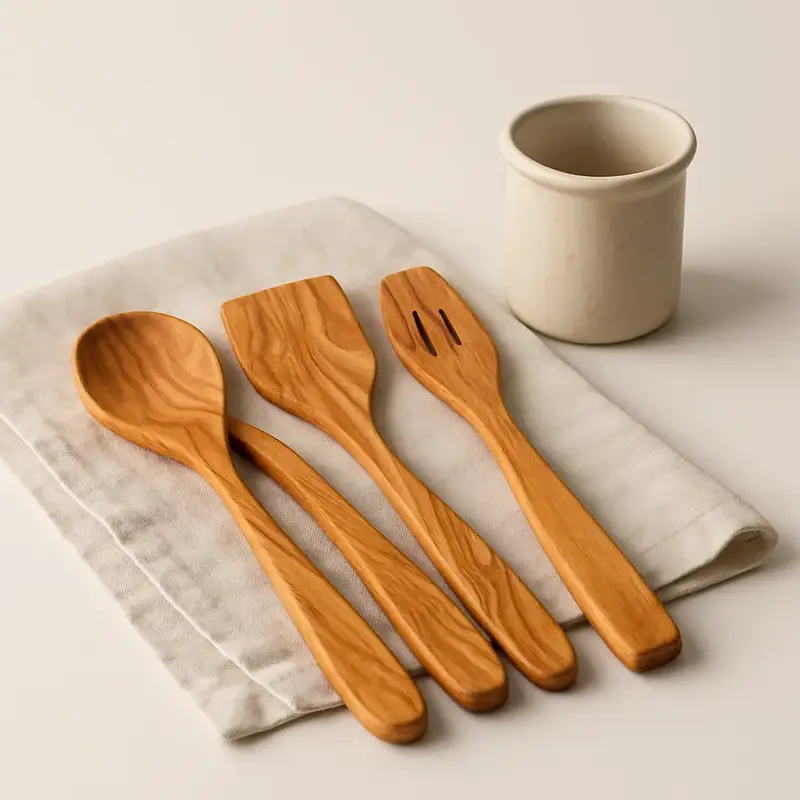
The Olive Wood Utensil Set operates in a different register entirely. These four hand-carved pieces — spoon, slotted spatula, salad fork, and curved scraper — are designed for stovetop cooking and serving, not cutting. Each piece carries its own grain pattern, which means no two sets look identical. They're at home on a spoon rest beside the stove as much as in a utensil crock.
Where the knife demands care and respect, the utensils and board ask only for hand-washing and periodic oiling. None of these products belong in a dishwasher.
Matching the Right Product to the Right Cook
A cook who does most of their prep from scratch — dicing vegetables, portioning proteins, mincing aromatics — will feel the difference the chef's knife makes almost immediately. Pair it with the bamboo board and you've protected that edge investment from day one.
Someone setting up a kitchen on a tighter budget, or shopping for a gift, might start with the utensil set or the cutting board. Both are genuinely useful without requiring any prior knowledge of blade steels or knife geometry.
For those who want to build a cohesive, lasting kitchen toolkit, all three products work well together: the knife and board handle prep, the wooden utensils handle everything at the stove and at the table. The materials — bamboo, olive wood, pakkawood, VG-10 steel — share a handmade, natural-materials aesthetic that holds together visually as well as functionally.
Different kitchens have different priorities. What matters is choosing tools that match how you actually cook, not how you imagine you might cook someday.
The Olive Wood Kitchen Utensil Set is a natural fit for home cooks who value craftsmanship over convenience. The four-piece lineup — spoon, slotted spatula, salad fork, and curved scraper — covers a wide range of tasks, and the hand-carved construction means no two sets look identical. Olive wood's dense grain makes these tools feel substantial and genuinely built to last.
The real trade-off is maintenance. Unlike nylon or stainless alternatives, olive wood demands hand-washing and occasional oiling to stay in good shape. Neglect that routine and the handles can dry out and crack. For cooks happy to give tools a little care, this set rewards that attention with years of reliable use.
Pros
Each piece has a unique, naturally beautiful grain pattern
Four versatile tools cover most everyday cooking tasks
Comfortable hand-carved weight suits long stirring sessions
Cons
Requires hand-washing and periodic oiling to prevent cracking
Wood can absorb strong odors from garlic or fish
Not suitable for high-heat contact with oven or grill
The 8-inch Japanese Chef's Knife is built for cooks who spend real time at the cutting board. VG-10 steel sits at the high end of what most home kitchens will ever need — it sharpens to a fine edge and holds it through weeks of daily prep without constant touch-ups. The triple-riveted pakkawood handle and full-tang construction give it a confidence-inspiring weight and balance that cheaper knives simply can't match.
The honest trade-off is cost and care. At $119, it's not a casual impulse buy, and it rewards proper treatment — hand-washing only, regular honing, and the occasional professional sharpening session. Paired with a quality cutting board that's gentle on edges, this knife becomes the kind of tool serious home cooks reach for every single day without thinking twice.
Pros
VG-10 clad steel holds a sharp edge for weeks of use
The Bamboo Cutting Board is a smart, no-fuss foundation for any kitchen setup. At 38×25cm it hits a practical middle size — large enough for most vegetable and meat prep, small enough to store and hand-wash without hassle. Bamboo's natural hardness is firm yet forgiving, which matters if you're using a quality chef's knife and want to protect that edge over time.
The main limitation is size and care. Cooks who regularly break down large cuts of meat or whole fish may find the surface a touch tight. And like all wood and bamboo boards, it won't survive a dishwasher cycle without warping — a monthly oil-down and prompt hand-drying are non-negotiable. Treated right, though, this board is a durable, knife-friendly surface that pairs especially well with the VG-10 chef's knife in this guide.
Pros
Naturally antibacterial bamboo surface requires no chemical treatment
Deep juice groove captures runoff from meat and fruit effectively
Gentle on knife edges, helping blades stay sharp longer
Cons
38×25cm size may feel cramped for large roasts or fish
Bamboo can warp if soaked or run through a dishwasher
Requires monthly oiling to prevent surface drying and splitting